Showing posts sorted by relevance for query foreclosure prevention response. Sort by date Show all posts
April 1, 2010
Press Release: HOM Announces (FIS) Foreclosure Intervention Specialist Training Underway in Charleston
Home Ownership Matters announces (FIS) Foreclosure
Intervention Specialist training underway in Charleston
Indianapolis, IN–April 1, 2010 — HOM President and Founder Mildred Wilkins is pleased to announce the overwhelming positive response from attendees of (FIS) the foreclosure certification program being offered for the first time in the state of South Carolina. Approximately sixty licensees began the 5 day certification program on March 15th, 2010 in Charleston. The Foreclosure Intervention Specialist Program (FIS) has additionally been approved by Real Estate Commissions in Colorado, Ohio, Oklahoma, Nebraska, Kansas and Indiana. It is expected that the program will be launched in Pennsylvania in early summer and has been offered in Florida without CE credit to attendees from a number of states. NAR provided funding for this critical training through their Foreclosure Prevention and Response (FPR) grant.
This certification program was developed by Mildred Wilkins, president of HOM, LLC headquartered in Indianapolis, Indiana. The program provides 30 hours of material in a classroom setting designed to prepare attendees to become knowledgeable about the options available to consumers who are in default on their home loans. Included in the course are components which address the foreclosure process, ethics, fair housing, the short sale process as well as options for keeping the home. Real estate professionals need a broad knowledge base to make appropriate recommendations when a default has occurred. (FIS) training provides that broad base. The practice of real estate has evolved rapidly as foreclosures have increased dramatically creating a need for a new field of knowledge. Foreclosure is frequently avoidable but unfortunately consumers have limited opportunities to learn what options are available. Nor has there been a way for consumers to identify professionals who have the ability to help them. Within the last two years professionals have sought to differentiate themselves with a short sale certification for this reason.
The Foreclosure Intervention Specialist (FIS) certification will set apart those agents who have taken extensive training to be prepared to handle the challenges associated with transactions when the consumer owes more than the property is worth on the open market. The training can alter the outcome of mortgage default when a consumer chooses an agent who is an (FIS) specialist. (FIS) is the oldest certification (offered first in 2005) and the most comprehensive of the programs available to agents. The completion of this program will also help licensees avoid liability while helping them to work more effectively to avert foreclosure for their clients.
Ms. Wilkins is a former Fannie Mae Broker-Specialist who sold foreclosed properties for their disposition department out of Dallas, Texas. She has received loss mitigation training from NeighborWorks America, Fannie Mae and HUD. Since founding HOM in 2002, her work has been featured in the New York Times and BusinessWeek, she has also appeared on MSNBC and NPR. In addition, foreclosure related articles she has written have been published in REALTOR magazines around the country.
Wilkins has been a faculty member for Graduate REALTOR Institute (GRI). She is also a former member of the faculty of NeighborWorks America as a trainer in Foreclosure Intervention. She is regularly a speaker or trainer at numerous state/regional conferences on foreclosure intervention, predatory lending, loss mitigation and/or mortgage fraud. She is widely recognized as a leading expert on these subjects. HOM has been certified as a continuing education provider for real estate professionals in Colorado, Nebraska, Kansas, Ohio Indiana, Kentucky, Tennessee, Oklahoma, Iowa, South Carolina and Alabama. Wilkins is an approved instructor for attorneys in Indiana and Ohio.
This (FIS) training session is scheduled for completion May 19 and 20. Registration is restricted to current enrollees. To schedule an (FIS) training series in your area, contact Mildred directly (866) 507-5105.
Copyright © 2009, Home Ownership Matters, LLC. All Rights Reserved.
(Please E-mail Heather at homeownershipmatters@gmail.com with any questions, comments or concerns you might have! We appreciate all comments and feedback, so please don't be shy.)
April 6, 2009
Community Service Announcement: Funding for Foreclosure Training
Home Ownership Matters is pleased to be able to tell you that NAR (National Association of REALTORS) announced on March 1, 2009 a grant of $3 million dollars which is to be used for foreclosure training by state and local real estate boards around the country.
As part of their “RIGHT TOOLS—RIGHT NOW” initiative, NAR has made the funds available by launching the Foreclosure Prevention and Response Program (FRP). Unlike many government programs which are complicated, with unclear guidelines and take months to implement, this initiative could easily be dubbed as the real estate professionals “giving back”. The funds can be used for either professional training and/or community outreach programs and it is very likely that the bulk of the funds will be utilized for training for agents who need to better understand the changes associated with helping a consumer who is either already in default or expects to be in default.
Personally, I’d vote any day for someone to help my agent afford the training they need to better understand my situation. Since REALTORS are self-employed many of them are struggling right along with other segments of the community, and would have difficulty paying for the specialized training which these funds will make possible.
Comprehensive training on how to manage a short sale is rather expensive, but is now attainable as a result of this program. If you need to sell a home and it is "upside down" would you rather have a well-trained "short sale specialist" or someone who has taken a 4 hour class on what to do?
The application process is easy (2 short pages) and while it requires coordination between your local board and the state board, it should not be difficult to have quality foreclosure training approved and scheduled within the next 6 weeks. The entire $3 million is set aside to be used by the end of 2010. For more information, log onto NAR for details.
(NAR) offering you the "RIGHT TOOLS—RIGHT NOW"
How is that for stepping up to the plate?
(Please E-mail Heather at homeownershipmatters@gmail.com with any questions, comments or concerns you might have! We appreciate all comments and feedback, so please don't be shy.)
December 14, 2009
...From the Desk of..."Are You Ready to Intervene?"
Twenty Questions for Today’s Real Estate Professional
I was recently asked by the Charleston Trident Board of REALTORS® to differentiate the (FIS) Foreclosure Intervention Specialist certification from other short sale certification programs. Please know that the Board has offered both the (SFR) (Short Sales and Foreclosure Certification) and the (LMC) (Loan Modification Certification) certifications which are excellent programs.
Both have been widely attended in Charleston and I strongly encourage you to sign up for one or both at the next opportunity. Every single licensee should avail themselves of a basic short sale class so they have a rudimentary understanding of this ‘new’ transaction which is dominating the market in many parts of the country.
(FIS) will be offered for the first time in South Carolina beginning March 2010, courtesy of a FPR (Foreclosure Prevention and Response) grant from NAR. I think the operative word of distinction is ‘basic’ as compared to ’comprehensive’. This 30 hour program is designed for the agent who has decided to commit to getting an in-depth understanding of the various facets of handling these intricate transactions—the relationship connection, the Law, the Ethics, property valuation, the process, the negotiating, getting to the closing table, the downside, the resources needed, community partnerships, the self-study to continue to grow and much, much more.
Why offer (FIS)? Because hundreds of students who had taken either the 4 or 8 hour basic short sale training classes offered by Home Ownership Matters beginning in 2003 demanded more. More time, more expansive, more details. The course evolved and in 2005, the (FIS) certification was introduced in Ohio. Since then (FIS) has been approved for CE credit in six (6) states and there are graduates from twelve (12) states. States approved for CE include: Ohio, Indiana, Kansas, Nebraska, Colorado and Oklahoma.
30 hours, 700+ pages of material.
Tried and true methodology coupled with sound philosophy
from a former Fannie Mae Broker-Specialist
Updated regularly and state specific (Law section)
I decided the easiest way to say what you’ll learn is to pose the questions which will be addressed.
Are you ready to intervene?
1. Do you know how to distinguish a ’frozen customer’ from a potential short sale client? Do you currently use an intake form to determine who is a viable candidate for this type transaction and who is just not prepared for the commitment? Can you screen OUT the 60% of folks whom you should not list as short sales?
2. Are you prepared to analyze/distinguish the many HATS which may be required to help someone who is in default: the social worker, medical counselor, marriage counselor, human resources helper, spiritual advisor, budget counselor, salesperson extraordinaire, valuation expert, etc.
Are you real clear on what role you can and/or should play? Are you connected to/familiar with the community resources to address those needs which are outside of your scope of expertise? Do you currently utilize a referral form for this purpose? Can you see the potential for a fair housing complaint (or other complaint) without some standardized referral policy/form?
3. Do you know how to ‘handle’ the law while avoiding the ‘practice of law’? Do you clearly understand that it is necessary to understand some components of the law (and be able to explain them to your client) as part of a short sale attempt or an REO purchase?
4. Do you understand the impact of the seller filing bankruptcy on a potential short sale? The increased likelihood of a deed-in-lieu? Do you currently discuss this at the onset with your customer since it could/should end your relationship if they file later?
5. Are you familiar with the new Treasury guidelines for short sale—other than the fact that the commission cannot be reduced below 6%? Have you studied the guidelines? Do you understand them?
6. Are you familiar with the foreclosure law in your state? Is it a judicial or non-judicial process? What difference does it make? The guidelines for service on a defaulted borrower? Familiar with what the customary forms are and what they look like? Are you aware that violation of state foreclosure law can work in a borrower’s favor to gain extra time which could be used to facilitate a short sale? Or a reverse mortgage?
7. Do you have the expertise to accurately determine the value of a property in today’s declining market? Are you familiar with the professional BPO which is used as the industry standard (fanniemaebpo.com)? Could you complete one and do you understand why it can be much more accurate than the more commonly used CMA or market analysis? Are you clear on why accurate property valuation, from the beginning, plays such a critical role in the success or failure of your short sale effort?
8. Do you feel you clearly understand the unique protocol for short sales, not to be confused with REO and traditional sales? Who signs what? When? Presentation of offers? To whom?
9. Have you figured out what to disclose? To whom? And when?
Are the guidelines set by your Broker consistent with both Federal and state requirements/prohibitions on disclosure? Are you clear on the Who? What? When? HOW?
10. Are you familiar with your Board and Broker’s position on:
a. Disclosure—Who? When? How?
b. Commission—Who? What? When? How?
c. Signing of offers/amendments/price reductions—Who? When?
d. Presentation of offers—To whom? When? Signatures? Why?
e. Multiple offers—that is a whole other 20 questions
11. Does your brokerage utilize a set of disclosure forms which have been customized for the use with short sale scenarios? Are you familiar with them? Do you understand the protection that you may gain from covering the special risks associated with short sale transactions? Are you interested?
12. Do you understand the tax implications for a borrower who has completed a short sale? Please don’t tell me that you thought they were off scot free because the short sale was approved. (They are not) Do you have a referral to a tax accountant?
13. Have you read your state’s Seller Disclosure Law? Have you studied the state disclosure form? Does it include a reference to “threatened or pending litigation“? Or perhaps “notices from any Government or quasi-governmental agency”? Any “challenge to the title”? Are you clear on why any/all of these could forestall a short sale approval and therefore need to be disclosed?
14. Do you have clarity on the impact of a foreclosure on your customer’s ability to purchase down the road? Was that part of your discussion about the reason to consider a short sale in the first place? Have you discussed operating ‘in good faith’ as vital to the ability to keep the house on the market?
15. Is there a 2nd (or 3rd) mortgage? Are there other potential liens against the home (home owners’ association, taxes, personal judgment) which must be dealt with? Got a plan for how you are going to handle those? Do you know where to start?
16. Do you clearly understand the role of the Guarantor and/or the investor in determining whether or not a specific short sale can be approved? For that matter, do you know that the Servicer is merely a go-between hired to facilitate the administration of the loan but is NOT a decision maker? Who is? How can you find them? What are THEIR guidelines? Are they the same from Guarantor to Guarantor? Available in public records?
17. Are you familiar with the Qualified Written Request—backed by Federal Law (RESPA, no less) and the impact it can have as a ‘tool’ in delaying the foreclosure process if well-prepared? Used effectively and in a timely manner, you can gain valuable time to complete the short sale. We’ll cover that.
18. Has your firm/Broker created a “hold harmless” document which covers the scenarios which you cannot be responsible for with the clear understanding from your client that you will have no liability? Since the risk of lawsuit is pretty high with this new type of transaction, getting some understanding of what should be included and why should be paramount, I would think.
19. Have you identified as an agent/brokerage/Broker those scenarios which will require you to end the relationship? Have you established a policy concerning the need for a unilateral (not mutual) release? Under what circumstances, with what notice?
Certainly advance disclosure would be required: I would recommend at the inception of the agency relationship. We cover in detail during (FIS) training what I call the “Divorce Decree”. What happens if the client abandons? Files Bk? Enters into a deed-in-lieu? Refuses showings? Fails to cooperate in other ways? Policies should drive practices and both help to minimize liability.
Proper training and thorough understanding on each of these issues is paramount in order for you to be both effective at processing a short sale from beginning to end AND avoid the various opportunities to get yourself or your client into serious trouble along the way.
Short sales are the new reality for many markets around the country. They have become a major part of the market (along with REO’s) and becoming intimately familiar with how to process them successfully is paramount for any agent who wishes to thrive in today’s market.
If you do not already have clarity on ALL the issues which have been addressed in this article, then you are a prime candidate for the (FIS) certification program. Each of these will be explored and addressed during this 30 hour training program. You will leave with clarity on every single point covered here and will have the expertise to feel confident that you are representing your client with strong tools which have prepared you to be successful in getting the result you hope for and they deserve. YOUR knowledge base is a key component of your professionalism. Your success as a REALTOR® is tied directly to the caliber of your information.
Don’t miss an opportunity to learn, explore and interact with one of leading instructors on this timely topic. Her experience actually doing short sales, her time with Fannie Mae as a Broker-Specialist and expansive training (HUD, Fannie Mae, NeighborWorks, Legal Services, and National Consumer Law Center) can be invaluable to you.
Sign up today! Coming soon to a classroom near you!
Final Question
Is there someone in your office to whom you can refer a customer who needs short sale help? Within your firm? Maybe you can/should become that ‘Referral agent’ if you do not have the expertise today.
Are you Ready to Intervene????
*(FIS) is a registered trademark of Home Ownership Matters, LLC.
Other Foreclosure Resources
3. www.HomeOwnershipMatters.com — Calendar and Foreclosure/Loss Mitigation sections
4. www.nti.org — NeighborWorks America — Training Institute
5. www.consumerlaw.org — National Consumer Law Center
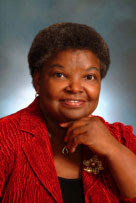
Mildred Wilkins
President of Home Ownership Matters
Author of “Your Real Estate Advisor”
available at: www.DovePublishingHouse.com
Toll-free 1 (866) 507-5105
Copyright © 2008, Home Ownership Matters, LLC. All Rights Reserved.
(Please E-mail Heather at homeownershipmatters@gmail.com with any questions, comments or concerns you might have! We appreciate all comments and feedback, so please don't be shy.)
June 5, 2009
From the Desk Of..."Mama Said"
“There’d be days like this...”
They try to warn us and still we are surprised. After all, they’re old and tired and out of the loop. How could they possibly have known? Perhaps they ‘remember’ more than we have yet to learn.
REALTORS...“Invisible” Casualties
They are not documented in the statistics, these self-employed (independent contractors) who call themselves REALTORS. They cannot draw unemployment nor is there a plan to cover their non-existent medical insurance premiums. They don’t garner a lot of sympathy in a lot of circles either. And to add injury to insult, they are sometimes blamed for participating in creating the crisis which has engulfed them as well. On a regular basis they call or email me wanting some advice on what can be done to save their personal residence. With increasing regularity attendees in short sale classes were motivated to attend by a need to save their own home. It is a sign of the times.
How Did We End Up Here?
I went on record as early as 2002 stating we were likely to dance dangerously close to a repeat of 1929 if we did not immediately halt the outlandish predatory lending, the crazy new construction financing and the whole speculative silliness on our coasts. After selling real estate for several years and keeping a close eye on the escalating foreclosures moving through the pipelines at Fannie Mae, I could see where we were headed.
My ex-husband and I purchased our first home in 1979 at 16% interest (with excellent credit I’ll have you know) so I had some familiarity with the housing drama of the mid-70’s and into the 80’s. But that was a housing crisis; this is a full-blown economic crisis. That was regional, this is international. I am only 58 and while I could see the tip of a nasty iceberg, I could not see, nor truly imagine, how much of the iceberg was underwater. (No pun intended). A housing problem which is restricted to one industry, or one region or demographic group, cannot create the kind of havoc which we are experiencing as an economic tsunami. The economic crisis which is crippling our country, and the world, will not improve dramatically in the short term; so it behooves all of us to “adjust as necessary”.
Life’s Lessons
The purpose of lessons is to get us prepared for the test. However, as adults, all too often we act as though we have forgotten that tests are a part of life, show up when and where you least expect them and are administered whether you are prepared or not. Welcome to the classroom for the test on “Living Large” or it might be called “Analysis of the Aftermath of an Unattended Bubble”.
I Was at a Crossroad
After a particularly difficult period following my divorce in the fall of 1991, I eventually emerged from an extended fog where I had felt overwhelmed and unable to cope. I had been summarily thrown off the “middle-class, stay-at-home mom, PTO president, Girl Scout leader” train into a new life as a divorcee. The house had been lost to foreclosure and the beautiful Celebrity station wagon (the ultimate status symbol) had been towed away during dinner. I was left to raise two wonderful children, sans child support.
Early Preparation Comes in Handy
In the wee hours of the morning I had a life altering revelation. I called Mama at 6 a.m. (she was already up) to tell her my great news. With a new sense of feeling empowered and ready to take on the world, I happily reported, “I am so glad that I was born poor and Black, in the south.” Her concerned reply was “Girl, are you alright?” I was better than alright, I was ecstatic. I had suddenly realized that I had within me the capacity to over-come things much more challenging and with a lot less maturity and preparation. I was healthy, college-educated (a testament to perseverance) with marketable skills as an interior designer and seamstress. I could figure it out.
Personal Inventory
A long held personal commitment to never giving up took that option off the table. Going home (back to Alabama) was also not an acceptable option for me, even though I strongly encourage others to consider it. What marketable skills could produce enough income to support us in the new apartment? I dabbled with interior design; I could expand it. As an excellent seamstress with strong referrals, I sought and was successful in getting my name added to the list of recommended seamstresses at a bridal shop and 3 home decorations shops. Mildred’s Speciality Fashions had been my hobby; it now became my dominant source of income (you see there was a downturn in the economy, and folks who previously would have called DECORATING DEN now called me instead). I also decided to supplement that income with house cleaning (a day job) which allowed me to continue to be available to the children and work into the night on the design and sewing. I let all my customers know that I needed more work and requested referrals. I expanded my cake decorating hobby and created a business card for that as well.
Long term planning
My income was sufficient as long as I worked 16-18 hours a day, 7 days a week. I needed to plan to cover college costs so I decided to plan for and become a REALTOR. (I know, better hours right?) January 1993 I joined the F.C. Tucker Company full-time, continued to work my evening gigs for 2 years and moved to six figures within 6 years at an average sales price of $150,000. In Indiana. The plan worked, I evolved, my needs and my life shifted and I founded HOM in 2002 because I saw this coming.
Are you where you need to be?
The most important question should not be whether or not you can survive. You CAN if you CHOOSE to do so. The deeper question is whether it is time for you to make a move...
a. Within the real estate industry
b. Into a fresh industry
c. Step back and expand a hobby or long held dream
Silver Linings in Unexpected Places
What looks and feels like a crisis can frequently be the catalyst which moves us to a long overdue change. Take some time and reflect on what is really important to you...family, friends, leisure time, personal development, spiritual growth or something I failed to include. Is there a chance that the upheaval in your real estate career is providing an opportunity to re-align yourself more closely with deeper values? Is this a chance to shed some undesirable aspect of your present life? Are you enjoying managing your rentals? Are you really seeing any gain from them? Could a smaller house, or even an apartment, relieve some pressure and make you life more pleasant? Have you really considered how you want the next stage of your real estate career to go, or are you foolishly grabbing any straw you see floating—hoping it will turn into a lifejacket?
Methinks the REALTOR needs a doctor
As a real estate professional it’s time you had a check-up. I would recommend you be tested for:
- Financial stability (or lack thereof)
- Emotional duress and mental stability
- Viable game plan
- Analysis of both short and long term goals
- Prognosis for longevity
There are not a lot of clinics which offer the services you need but I can offer you some helpful reading which can be found on this blog, specifically these two entries:
I feel pretty confident you’ll find some other entries which are helpful as well.
You would also benefit immensely from attendance at a “Buying TIME” and “Short Sale: Not Your typical Transaction” class. Both could be scheduled locally, by your real estate board. It is no small thing that funding for these courses might be provided by NAR as part of their Foreclosure Intervention and Prevention Response program. Talk to your local board today about scheduling one, or both, of these classes.
Copyright © 2008, Home Ownership Matters, LLC. All Rights Reserved.
(Please E-mail Heather at homeownershipmatters@gmail.com with any questions, comments or concerns you might have! We appreciate all comments and feedback, so please don't be shy.)
February 5, 2009
What's That Mean?! (A-N)
You know how sometimes you see some letters jumbled together, and they just don't make a single bit of sense to you? Well, maybe this list of acronyms and abbreviations will help.
A.B.A.—American Bar Association
ALTA—American Land Title Association
A.P.R.—Annual Percentage Rate
ARM—Adjustable Rate Mortgage
BAPCPA—Bankruptcy Abuse Prevention and Consumer Protection Act of 2005
BPO—Broker Price Opinion
CAIVRS—Credit Alert Investigation Verification Response Systems.
C.D.—Certificate of Deposit, see page
CDC—Community Development Corporation.
CMA—Comparative Market Analysis
C.P.M.—Certified Property Manager
C.T.A.—Cum Testamento Annexo (with the will attached. See Administrator C.T.A.)
CRV—Certificate of reasonable value.
DBA—Doing Business As.
DOM—Days on Market, see page #??
ECOA—Equal Credit Opportunity Act
EEM—Energy Efficient Mortgage
EIC—Earned Income Credit
EPA—Environmental Protection Agency.
ERTA—Economic Recovery Act of 1981.
FDC—Fair Debt Collection law
FDIC—Federal Deposit Insurance Corporation
FHA—Federal Housing Administration
FHLMC—Freddie Mac
FICO—See credit score.
FIS—Foreclosure Intervention Specialist
FSBO—“For Sale by Owner”
FTC—Federal Trade Commission
GFE—Good Faith Estimate
GNMA—Ginnie Mae
HECM—Home Equity Conversion Mortgage
HELOC—Home Equity Line of Credit
HOEPA—Home Owner Equity Protection Act--
HUD—Housing and Urban Development
HUD-1—See Settlement Statement.
IRA—Individual Retirement Account
LIHEAP—Low Income Home Energy Assistance
MERS—Mortgage Electronic Registration System
MIC—Mortgage Insurance Case Number
NAR—National Association of REALTORS
NSF Fee—Non-Sufficient Fund Fee. See Return check fee.
If you have any questions about these, you should always feel free to leave us a comment, or e-mail us.
A.B.A.—American Bar Association
ALTA—American Land Title Association
A.P.R.—Annual Percentage Rate
ARM—Adjustable Rate Mortgage
BAPCPA—Bankruptcy Abuse Prevention and Consumer Protection Act of 2005
BPO—Broker Price Opinion
CAIVRS—Credit Alert Investigation Verification Response Systems.
C.D.—Certificate of Deposit, see page
CDC—Community Development Corporation.
CMA—Comparative Market Analysis
C.P.M.—Certified Property Manager
C.T.A.—Cum Testamento Annexo (with the will attached. See Administrator C.T.A.)
CRV—Certificate of reasonable value.
DBA—Doing Business As.
DOM—Days on Market, see page #??
ECOA—Equal Credit Opportunity Act
EEM—Energy Efficient Mortgage
EIC—Earned Income Credit
EPA—Environmental Protection Agency.
ERTA—Economic Recovery Act of 1981.
FDC—Fair Debt Collection law
FDIC—Federal Deposit Insurance Corporation
FHA—Federal Housing Administration
FHLMC—Freddie Mac
FICO—See credit score.
FIS—Foreclosure Intervention Specialist
FSBO—“For Sale by Owner”
FTC—Federal Trade Commission
GFE—Good Faith Estimate
GNMA—Ginnie Mae
HECM—Home Equity Conversion Mortgage
HELOC—Home Equity Line of Credit
HOEPA—Home Owner Equity Protection Act--
HUD—Housing and Urban Development
HUD-1—See Settlement Statement.
IRA—Individual Retirement Account
LIHEAP—Low Income Home Energy Assistance
MERS—Mortgage Electronic Registration System
MIC—Mortgage Insurance Case Number
NAR—National Association of REALTORS
NSF Fee—Non-Sufficient Fund Fee. See Return check fee.
If you have any questions about these, you should always feel free to leave us a comment, or e-mail us.
Copyright © 2008, Home Ownership Matters, LLC. All Rights Reserved.
You can find more helpful definitions of Acronyms and Abbreviations like these in Your Real Estate Advisor which can be purchased at www.DovePublishingHouse.com.
(Please E-mail Heather at homeownershipmatters@gmail.com with any questions, comments or concerns you might have! We appreciate all comments and feedback, so please don't be shy.)
Subscribe to:
Posts (Atom)
